
Drones to improve speed and reliability of NHS tests for up to 1.8 million people across southwest London
Drone delivery is now embedded as an essential part of the South West London Pathology (SWLP) modernisation agenda, with expansion planned to additional hospital and GP sites
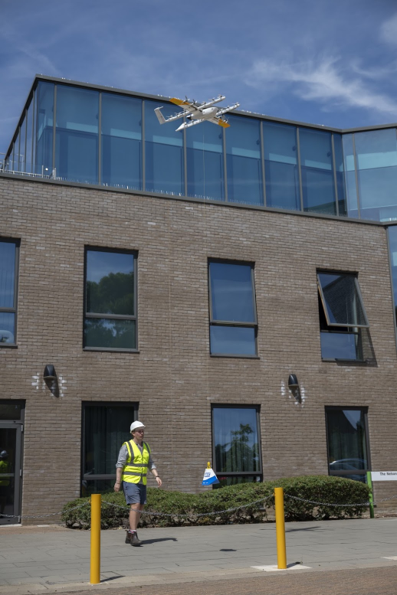
Since February, drones have been picking up samples from the Nelson Health Centre in Raynes Park and delivering them in just over three minutes to the SWLP laboratory at St George’s Hospital in Tooting for testing.
The drones, which are designed specifically for safe and efficient small package delivery, provide additional logistics resilience, helping ensure rapid, reliable transportation of urgent samples at a time of heightened pressure on NHS services. This is especially vital during the summer months where extreme temperatures are increasing disruption on London’s already highly congested roads.
SWLP provides services to a patient population of 1.8 million people, processing 51 million samples annually for all NHS trusts and GP services in southwest London. Working with British healthcare logistics startup Apian, SWLP aims to deploy drones to link sites across its network, including St Helier, Croydon and Kingston hospitals, as well as primary care services.
Simon Brewer, Managing Director of SWLP said: “We are investing heavily in automation and digitisation, introducing other cutting-edge technologies to improve diagnostic precision and speed across the network. But the impact of this investment will be restricted if samples are still getting stuck on roads. Drones help us move samples faster, cheaper and greener, and are now a core consideration of our logistics plans.”
Over 2,000 patients have already benefited from deliveries that are up to 85% faster than ground logistics. By speeding up test results, the service allows clinicians to provide more timely and effective care for patients.
Wider rollout has the potential to save SWLP money by reducing reliance on vans and motorbikes across its network. Drones are already up to 23% cheaper than existing urgent couriers on some of the routes, with the cost expected to decrease further over time.
The NHS is responsible for 4% of the country’s carbon footprint, so the electric drones can also help to lower emissions and improve air quality for Londoners, as they produce 98% less CO2 per delivery compared to delivery vans.
The inclusion of the Nelson Health Centre, a community healthcare hub serving 27,000 patients, marks the first time drones have picked up samples on a routine basis from an NHS primary care facility. Andy Christodoulou, Senior Portfolio Manager at Community Health Partnerships, which manages the site, hails the drones as “a fantastic innovation that is helping the NHS to provide a smooth and effective operation as we expand our services for the community. The drones are reliable and unintrusive, and the NHS staff and patients are always thrilled to see them. The initiative demonstrates how modern, fit for purpose NHS LIFT (Local Improvement Finance Trust) infrastructure can enable forward thinking innovation.”
This service forms the blueprint for how drones will support the crucial shift from hospital to community care, but Apian has already made drone delivery a daily norm for NHS hospitals across London. Dr Sabena Mughal, an NHS paediatric consultant and Director of Healthcare Partnerships at Apian, said: “Drone delivery is no longer a novelty; it has become an essential part of healthcare logistics. Having delivered thousands of samples across London, we have helped clinicians make time-critical decisions for heart attack patients and accelerated critical diagnoses for paediatric patients. These services improve clinical outcomes whilst reducing both costs and carbon emissions. With these benefits firmly established, our focus is now on expanding the network nationwide.”
The startup, which was co-founded by NHS doctors, is partnering with the global drone operator Wing to roll out this technology. Wing is an Alphabet company that has now completed well over one million commercial deliveries worldwide and is scaling rapidly in the US with retail partners like Walmart and DoorDash. Despite this, it sees the NHS as the best possible partner to grow its healthcare operations. Wing’s Chief Business Officer, Heather Rivera, said: “We are thrilled with the success of Wing’s collaboration with Apian and the NHS in southwest London, where our dependable, lightweight drone technology is providing clear benefits to the local community.”
Kate Slemeck, managing director for St George's University Hospitals NHS Foundation Trust, added: “Harnessing drone technology is helping clinicians to provide more timely and effective care for patients by allowing us to deliver rapid, reliable testing on urgent samples by cutting delivery time from around 20 minutes to just over three.
“What once may have seemed like something from a sci-fi film is now very much a reality across our hospital sites, as drones help us to deliver faster and greener care, cutting emissions while continuing to prioritise patient safety.”
Image: NHS delivery drone pickup up pathology samples from the Nelson Health Centre






.jpg)
.png)




Comments
There are no comments yet for this item
Join the discussion