
ENAIRE advances the use of drones to support the flight inspection of radio aids
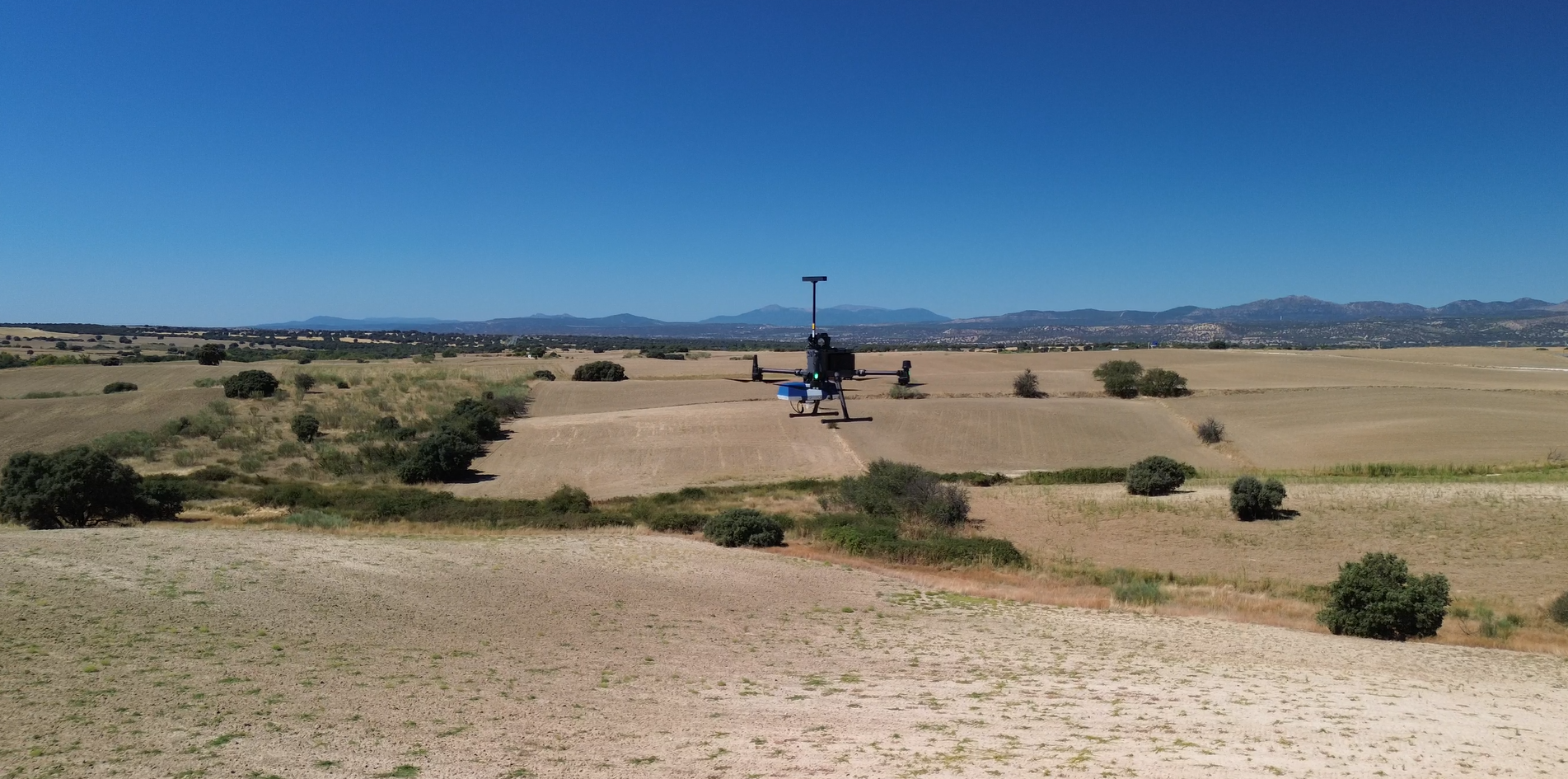
ENAIRE, Spain’s national air navigation service provider, is driving technological innovation in its services by validating a receiver installed on drones to assess air navigation radio aid signals in flight. This initiative marks a step forward in the calibration of these systems and will help optimise and modernise the maintenance processes for systems that are critical to aviation.
As a certified provider of air navigation services under Regulation (EU) 373/2017, ENAIRE is responsible for operating a broad network of radio aids that guide aircraft through the various phases of flight.
These installations require regular checks both on the ground and in flight. Traditionally, in-flight checks have been carried out using aircraft specially equipped with highly accurate signal measurement and recording systems, with technicians on board. The current project is exploring the use of drones as a complementary tool for these tasks. This project should not be seen as a substitute for the flight inspection tasks that air navigation service providers carry out in accordance with procedures established by the International Civil Aviation Organization, but rather as a means of improving the efficiency of these checks and support potential pre-adjustments and additional verification tasks.
What is the solution designed to do?
The aim of the project is to give ENAIRE the future capability to use suitably equipped drones to complement and improve the current radio aid maintenance procedures at the facilities for which it is responsible. This approach would:
• complement—or, in certain cases, replace—some of the checks currently carried out using manned aircraft;
• support maintenance and calibration tasks prior to the commissioning of new installations;
• provide highly accurate data with greater operational flexibility.
Once the solution has been validated, ENAIRE expects it to bring significant benefits, including support for the routine maintenance of ILS and VOR radio aids, as well as more efficient use of flight inspection aircraft. It is also exploring further applications in areas such as GPS signal quality assessment, the analysis of other radio aids and interference detection.
Multiple trials
ENAIRE has conducted trials at a range of locations, including Logroño, Madrid, Vitoria, Valencia, Barcelona, Santiago, Vigo and Asturias. This puts the organisation at the forefront of technological innovation in the sector and strengthens its ability to compete and innovate.
Following this initial requirements phase, ENAIRE will begin the phased roll-out of the technology, with further trials, updates to operational procedures and its gradual integration into maintenance tasks under its strategic plan, Flight Plan 2030.
Greater efficiency, sustainability and safety
The introduction of drones will improve both cost and operational efficiency by combining technological innovation with more streamlined processes. Some of the checks currently carried out using flight inspection aircraft could also be performed by drones. Initially, they would act as a complement to existing resources, while over time ENAIRE would explore the possibility of gradually reducing the flight time required for inspection aircraft.
The technology will also enable faster, more flexible intervention, reducing downtime through earlier fault detection and minimising the impact on airport operations. Drones will be able to access complex areas or locations that are difficult for ground teams to reach, while carrying out highly accurate measurements.
Taken together, these capabilities strengthen service resilience and continuity, while opening the door to new business models and advanced air navigation services.
.png)

.jpg)









Comments
There are no comments yet for this item
Join the discussion