
The Government has authorised the tender for ENAIRE's new Air Traffic Control Centre in the Balearic Islands, at a cost of €81.4 million

The Council of Ministers has today authorised the Ministry of Transport and Sustainable Mobility to tender, through ENAIRE, for the relocation of ENAIRE's Balearic Regional Air Navigation Directorate headquarters and the construction of the Balearic Air Traffic Control Centre on land at Son Bonet Aerodrome, in the municipality of Marratxí. ENAIRE will run an open tender for the construction contract, worth €81.4 million (excluding VAT), with a 32-month construction period.
The new Balearic Regional Directorate headquarters will house the Air Traffic Control Centre, currently at Palma de Mallorca Airport. This frees up the current site at Palma de Mallorca Airport for Aena's airport upgrade work.
Upgrading ENAIRE's Balearic facilities—both technologically and operationally—will improve air traffic management efficiency and environmental sustainability in the region.
The new Balearic Control Centre's location, chosen in coordination with Aena, means construction can take place on a separate site within Son Bonet Aerodrome, without disrupting current operations and ensuring a safe, efficient and orderly operational transition.
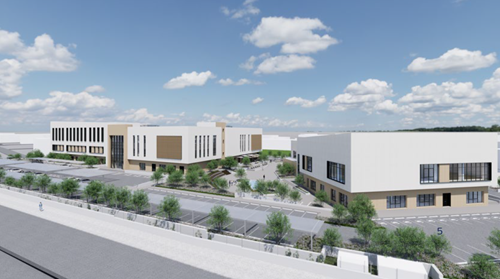
Four modules
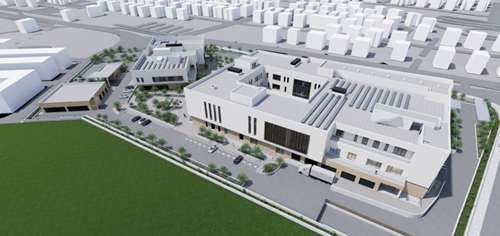
The new headquarters of ENAIRE's Regional Air Navigation Directorate in the Balearic Islands will consist of four building modules, each serving a specific function.
The two main modules are:
- Main Building (Air Traffic Control Centre and offices): the centre's operational hub, dedicated to real-time air traffic control. It will also house operational support offices.
- Training, Simulation and Contingency Centre: supplementary backup infrastructure designed to keep operations running during contingencies. It will also serve as a simulation and training centre.
The two secondary modules are:
- Support Systems Module.
- Access Control Module.
The relocation and construction of the Balearic Control Centre is one of the cornerstones of ENAIRE's new strategic plan, known as Flight Plan 2030, and offers a strategic chance to modernise in line with Spain's air navigation goals of growth, efficiency and improvement. The Centre will be a key facility for managing airspace across the Mediterranean corridor, with continuous operations and the flexibility to meet future challenges.
The construction project includes measures to strengthen environmental sustainability, landscape integration, water conservation and heritage preservation. The new Control Centre will use materials and designs that meet environmental requirements and blend with the surroundings.
Green spaces and parking will make up 35% of the site.
From a socio-economic perspective, the project will help strengthen the local and regional economy, with lasting positive effects on employment and business.
Optimisation of resources and infrastructure
Following a detailed analysis of the options, ENAIRE chose to relocate its Balearic Regional Directorate headquarters, including the Control Centre. The decision prioritised making the most of public resources and infrastructure.
Providing efficient direct access for the Palma Control Centre's operational and support services would have required significant investment. In the long term, this could have proved inefficient given the limited space on the current site, within an airport already undergoing a major upgrade.
The analysis identified Son Bonet Aerodrome as the most efficient, sustainable and future-proof choice for ENAIRE's services in Balearic airspace.
This investment shows the Ministry of Transport and Sustainable Mobility's commitment to safety, service quality, sustainability and efficiency. This commitment is particularly important for the Balearic Islands, which are a key driver of Spain's economy.
.jpg)





.png)





Comments
There are no comments yet for this item
Join the discussion