
What 30 Years of Innovation Can Teach Us About Aviation’s Future
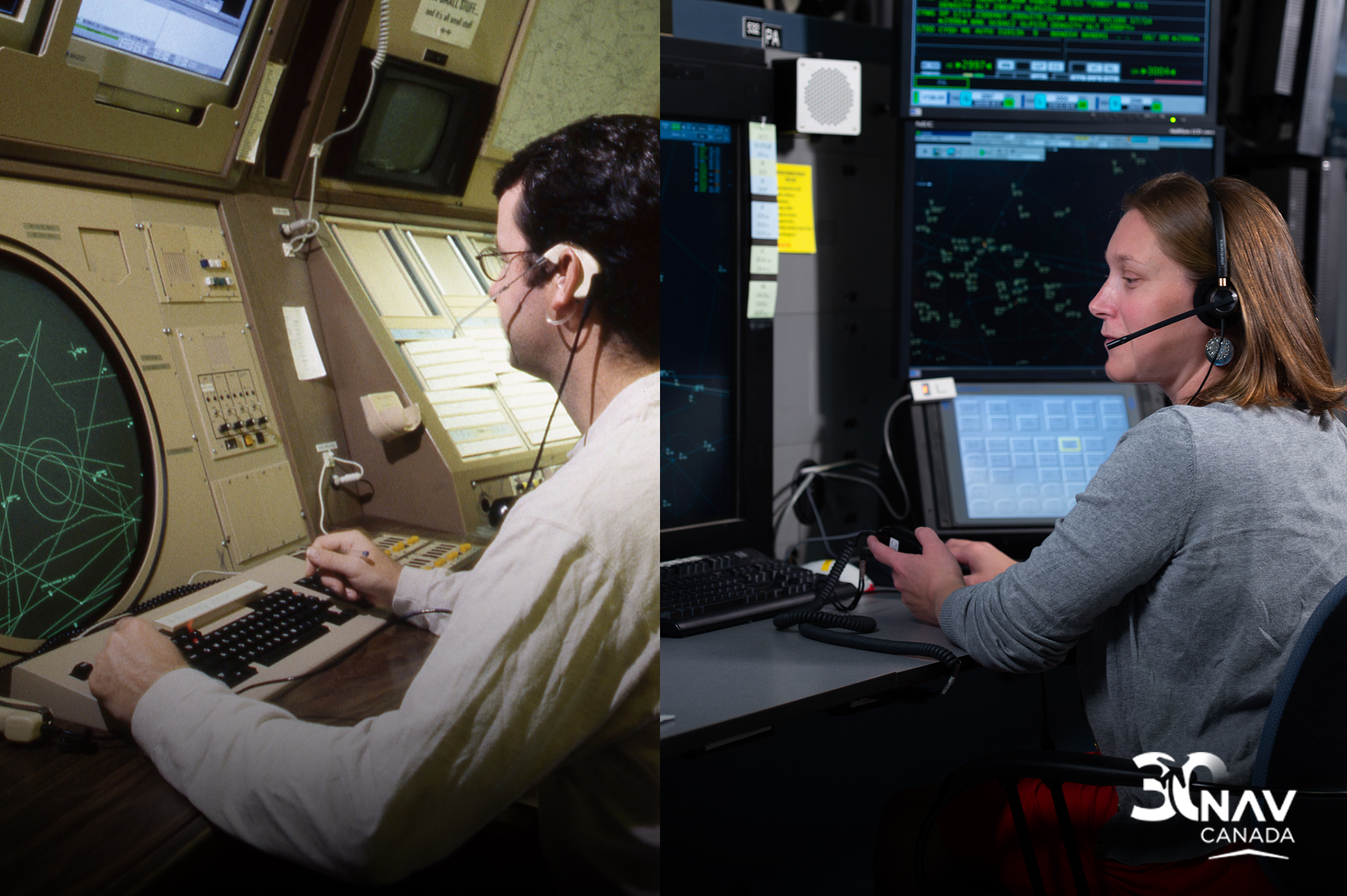
Celebrating Where We've Been and Where We're Going
If thirty years of Canadian aviation have taught us anything, it is that progress depends on our ability to anticipate change and respond to it with purpose.
In 1996, Canada chose a different path. It established the world’s first private, not-for-profit air navigation service provider and gave NAV CANADA responsibility for managing one of the largest airspaces in the world.
A lot has changed since then. Traffic has grown. Technology has fundamentally changed how we operate. The expectations of our customers, our people and the travelling public have evolved. And the sky itself is beginning to serve purposes we could scarcely have imagined thirty years ago.
Looking back, what strikes me is how consistently people across NAV CANADA applied their expertise to meet the system’s changing needs. That ability offers an important lesson as we look ahead.
While we cannot predict exactly what the aviation system of 2056 will look like, we can make decisions today that ensure Canada is ready for it.
Innovation Has Always Been Part of the Canadian Model
Consider where Canadian air traffic management stood when NAV CANADA was created.
Flight data was still managed using paper strips. Controllers annotated them by hand and physically moved them as an aircraft progressed through the system. Within a few years, in 1998, our engineers, technologists and operational teams had helped move that information into the digital domain through a product called EXCDS.
Other challenges required different solutions. In 2004, we extended radar surveillance into one million square kilometres of northern airspace. In 2009, ground-based ADS-B made it possible to track aircraft over Hudson Bay. Later, in 2019 space-based ADS-B fundamentally changed what was possible over oceanic and remote airspace. By 2023, that system was saving 45,000 tonnes of CO₂every year and returning roughly $2 in value for every $1 spent.
Different technologies. Different operational challenges.
What connected them was not a single technology roadmap stretching across three decades. It was a consistent ability to understand what the system needed and turn that need into practical innovation. That distinction matters.
Technology has never been the end game. Safer operations, better service and a stronger aviation system are. Technology is one of the tools that helps our people deliver them.

Different Eras, Different Challenges
NAV CANADA’s first three decades did not follow a straight line. The early years required confidence in a new operating model. Canada had done something unprecedented and the world was watching to see whether a private, not-for-profit air navigation service provider (ANSP) could sustain the same safety standards as a government department. Every metric mattered.
The second decade was about scale. As traffic and expectations grew, the challenge expanded to include capacity, automation and the reach of our services. We built Canadian Automated Air Traffic System (CAATS), Gander Automated Air Traffic System (GAATS) and controller-pilot data link communications. We extended surveillance. We standardized our infrastructure with the common hardware integration platform. Greater computing power and storage enabled capabilities that were not previously possible, helping our people improve safety and capacity. This was also a period of growing global ambition, as NAVCANatm brought Canadian expertise and technology to customers around the world.
The third decade brought significant adversity. The pandemic caused traffic and revenue to fall sharply, difficult decisions followed, and the effects did not end when flights returned. It required us to refocus on our core business, rebuild capacity and revitalize critical infrastructure. For me, that experience reinforced an important lesson: resilience does not maintain itself. It must be actively built in our people, our systems and our willingness to absorb short-term loss to protect long-term capacity.
We are applying that lesson today as aviation enters another period of significant change.
What the Next Era Will Require
That change will bring new types of aircraft, growing demands on airspace and digital systems that will support ATS staff in managing the capacity and complexity of future operations. Artificial intelligence will also influence how our industry approaches technology.
The question is not simply how we handle more aircraft. It is how we build an aviation system capable of safely managing a far more diverse mix of users, including remotely piloted aircraft systems, advanced air mobility and space operations, while remaining focused on why we exist as a company: to provide safe, reliable and efficient service delivery.
AI, digital facilities, trajectory-based operations, improved data sharing and more advanced automation will all be part of the answer. But in a safety-critical industry, technology cannot run ahead of trust, governance or accountability.
Aviation remains a people-driven industry. The opportunity is to use automation and data to reduce unnecessary workload, improve situational awareness and support better decisions, while keeping human expertise, oversight and accountability firmly at the centre.
At NAV CANADA, that approach is already shaping the choices we are making.
Canada’s first digital air traffic facility in Kingston, Ontario, represents more than a new facility. It is part of a broader shift toward more flexible, resilient and digitally enabled service delivery.
Aviation does not stop at national borders, and no single ANSP can build the future in isolation. That is why joining the iTEC Alliance in 2024, and the SESAR 3 Joint Undertaking in 2026, as the first ANSP outside Europe, matters. It gives Canada a voice in shaping the standards, technology and governance that will define the next generation of air traffic management.
I see enormous opportunity here, but the scale of the challenge is significant. Canada’s drone and advanced air mobility sector could contribute more than $69 billion to GDP and support over 290,000 jobs by 2045. With more than 500,000 aircraft expected in low-level airspace and over 50,000 RPAS operations a day, safely integrating new users is no longer a distant challenge. It is work we need to do now. That is why we are delivering the RPAS Flight Information Management System, with initial capabilities targeted for 2029.

Canada’s Opportunity
Thirty years ago, Canada had the courage to do something no country had done before. The result was an organization that went on to eliminate radar blind spots, pioneer satellite surveillance and build a model that governments around the world still study.
The next chapter will require that same willingness to think differently.
But I believe the challenge has changed. The future will not be defined by how many individual technologies we introduce. It will be defined by how well we bring people, technology, data, infrastructure and partners together as one system.
Canada has shown it can lead through change. Our advantage lies in the strength of our aviation ecosystem and the way its partners already work together. By building on that foundation, we can help shape a safer, more resilient and more capable future for aviation in Canada and around the world.










.png)
.jpg)
Comments
There are no comments yet for this item
Join the discussion