
Europe’s skies, Europe’s future: EU investment critical for keeping Europe connected, competitive and sustainable, say aviation leaders
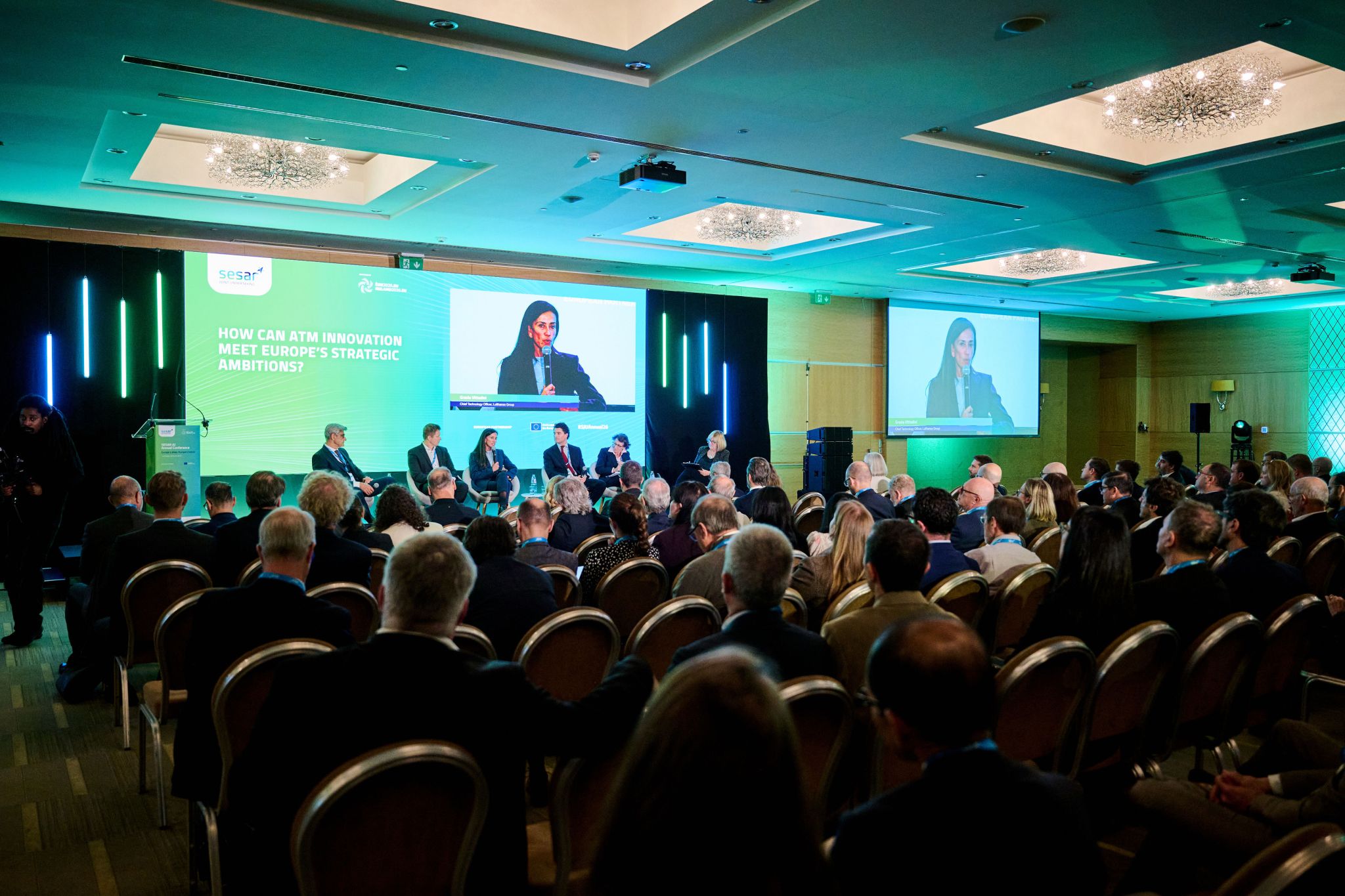
Europe's skies are vital to its future, and so is investment in air traffic management - the critical infrastructure that keeps Europe connected and supports its competitiveness. That is the main message from the 450 policymakers, industry leaders and research stakeholders gathering today in Brussels for the SESAR Joint Undertaking Annual Conference under the theme "Europe's skies, Europe's future". With Europe facing growing traffic, new security challenges and intensifying global competition, participants are calling for continued support to modernise Europe's air traffic management (ATM) system through innovation and synchronised deployment of SESAR.
Investment in ATM modernisation is key to maintaining Europe's edge in ATM innovation through "Made in Europe" technologies. Europe is the global leader, with European technology managing around 70% of global airspace. SESAR has helped build this leadership by providing a unique environment for European industry to trial, validate and bring new ATM technologies to market faster.
The case for continuing that investment is clear. This summer, the European network handled a record 37,659 flights in a single day, illustrating the scale of the system on which people, businesses and economies depend. Greater efficiency and better use of capacity are increasingly important as traffic grows, while Europe must also ensure that its ATM system can withstand disruption and remain resilient in the face of new security threats. Emerging technologies such as artificial intelligence and automation offer an opportunity to transform how air traffic is managed, helping to meet these demands while reducing aviation's environmental impact and supporting its climate goals.
The conference is being held under the patronage of the Irish Presidency of the Council of the EU, for whom the importance of resilient air connectivity is particularly clear. The country has a rich aviation history, from pioneering transatlantic flight to becoming a major global centre for aircraft leasing.
Speaking at the conference, Seán Canney TD, Minister of State for International and Road Transport, Logistics, Rail and Ports, said: "As an island nation, Ireland relies on aviation to connect our people and businesses with Europe and the wider world. Our history as an aviation nation has shown the value of combining innovation, expertise and international cooperation. Reliable and resilient air traffic management is fundamental to maintaining that connectivity and supporting economic growth, tourism and jobs. Europe must continue to work together to ensure that our skies are safe, efficient and equipped to meet future demand. SESAR is an important part of that effort, bringing together European expertise to develop the technologies and solutions that will shape the future of air traffic management."
The conference comes as the SESAR JU Digital European Sky programme reaches its halfway point - a natural moment to take stock of what European collaboration has achieved. The programme has completed its first wave of industrial research, delivering 48 new solutions and bringing the total number of solutions delivered for implementation to 185. The next wave is already underway, with 48 new exploratory and industrial research projects now developing the next generation of solutions. The Digital Marketplace exhibition and awards taking place at the conference put that progress in the spotlight, recognising some of the most innovative projects delivering technological advances, operational benefits and environmental impact across Europe.
A key milestone at the conference is the handing over to the European Commission of a proposal for Common Project 2 (CP2), prepared by the SESAR JU in close coordination with the ATM community. The proposal identifies the solutions that could form part of the next phase of synchronised deployment across Europe from 2028, creating a pathway for the results of European research to be taken forward into operations. This deployment could deliver significant benefits between 2028 and 2050, far outweighing the investment required, through fewer delays, more efficient flights and improved operational efficiency.
The handover comes as the European Commission develops a new EU Aviation and Aeronautics Strategy, with the aim of strengthening Europe's competitiveness and resilience while accelerating the green and digital transition. Speaking ahead of the conference, Apostolos Tzitzikostas, European Commissioner for Sustainable Transport and Tourism, said: "Europe's aviation sector must remain competitive, resilient and ready for the future. Innovation is key to achieving this, turning European research excellence into practical solutions that benefit passengers, businesses, and the economy. As we prepare the new EU Aviation and Aeronautics Strategy, SESAR and its partners have an important role to play in keeping Europe at the forefront of aviation innovation and strengthening our sector's position globally."
Building on Europe's existing competitive strengths will be essential to securing its position in the next wave of innovation. Speaking at the conference, MEP Jan-Christoph Oetjen said: "Europe has the knowledge, talent and industrial strength to lead the next wave of innovation in aviation. The question is whether we are prepared to invest in it. Strategic EU investment can leverage the competitive advantage we already have, strengthen Europe's innovation capacity and create the conditions for high-quality jobs and a high quality of life for our citizens in the years ahead."
Looking to the future, the European Commission's proposal for the next Horizon Europe framework recognises aviation as a strategic priority through the Smart and Clean Aviation moonshot. The challenge now is to translate that ambition into substance for SESAR/ATM: defining the future research and innovation priorities, and securing the investment needed to deliver it. It is estimated that EUR 66 billion of investment in aviation R&I and market uptake will be needed across Europe between 2028 and 2034, including EUR 5 billion for ATM.
Bridging research and deployment will be central to making this investment deliver results. Andreas Boschen, Executive Director of the SESAR Joint Undertaking, said: "Europe has built a world-leading ATM innovation ecosystem, but we should not take this leadership for granted. The technologies we are developing today will determine how safely, efficiently and resiliently Europe can manage its skies tomorrow. Our common challenge is to accelerate the journey from research to deployment and ensure that Europe continues to invest in the capabilities it will need for the decades ahead."





.png)
.jpg)





Comments
There are no comments yet for this item
Join the discussion