
SOPHIA ATC Systems presents SOPHIA SAMUEL, a surface awareness platform for runway incursion prevention
A scalable platform combining vehicle tracking, protected-area monitoring, ADS-B integration, predictive conflict alerts and operational analytics
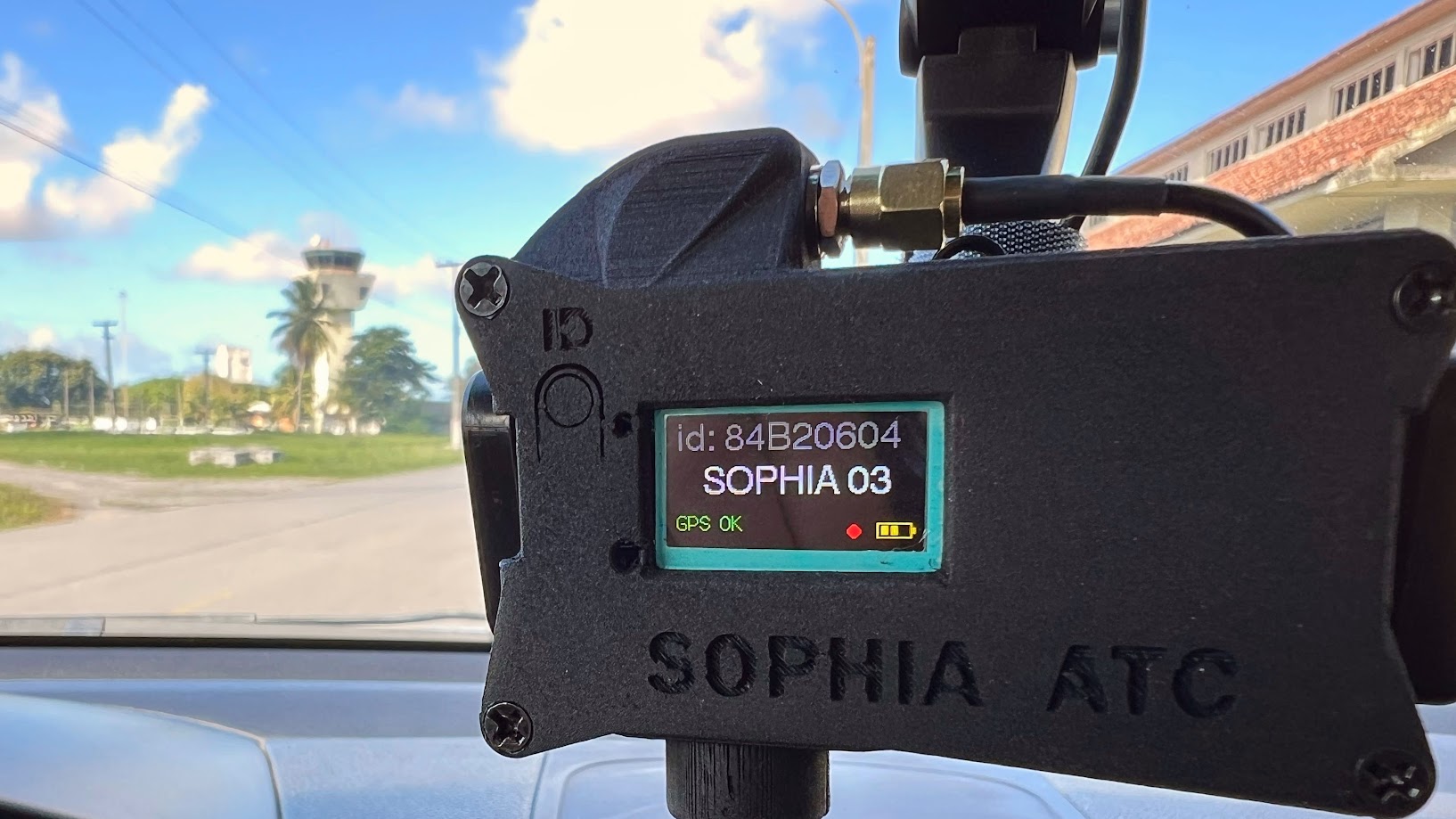
SOPHIA ATC Systems, a Brazilian company focused on Air Traffic Management and aviation technology, presents SOPHIA SAMUEL (Surface Awareness and Movement Unified Evaluation Layer), a surface situational awareness platform developed to support airport operators and Air Traffic Services in the prevention of runway incursions and conflicts involving aircraft, vehicles and other mobile assets.
SAMUEL combines real-time vehicle tracking, protected-area monitoring, onboard warning devices, complementary aircraft information, predictive conflict detection and operational analytics in a single environment designed around airport surface operations.
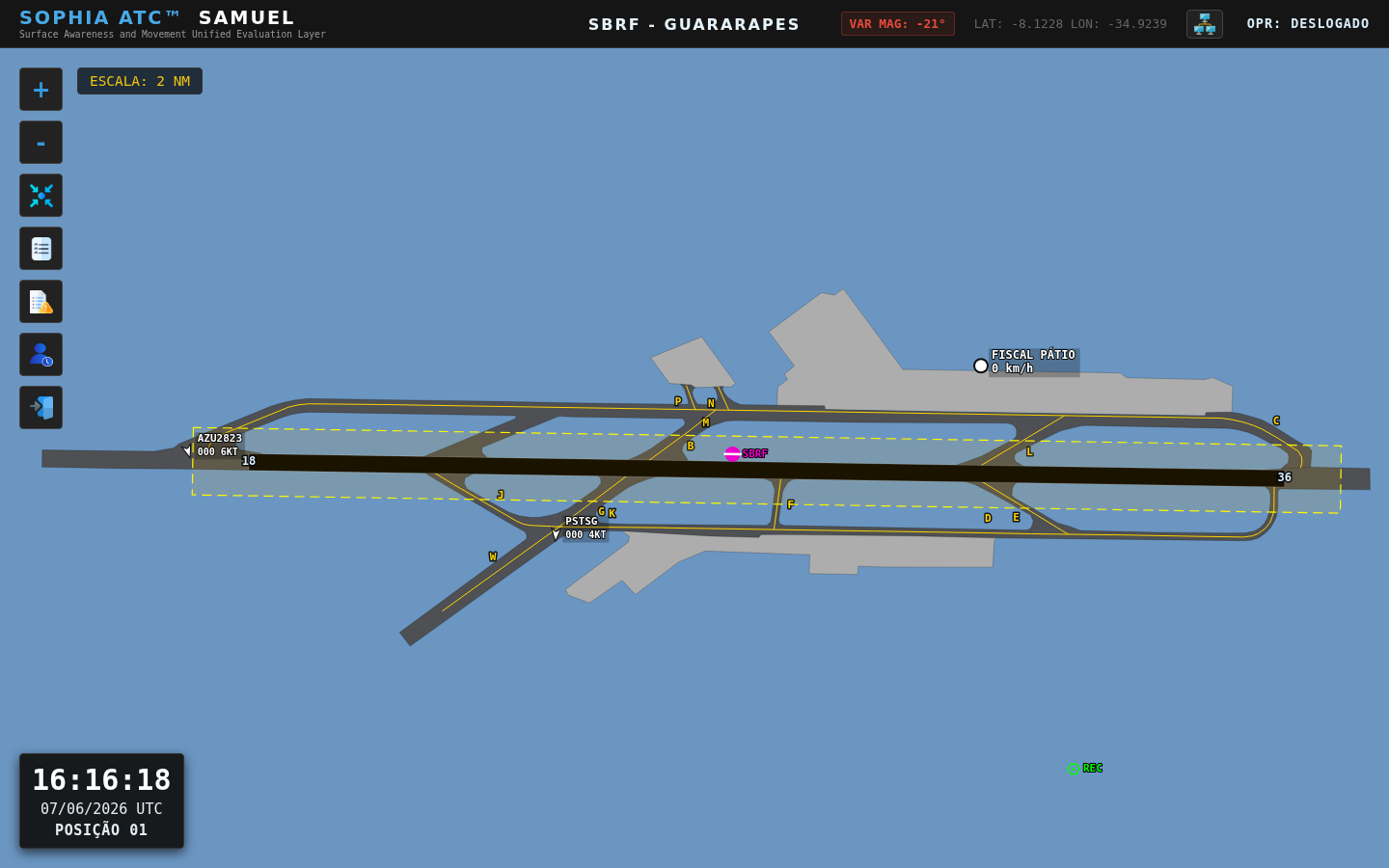
SOPHIA SAMUEL operational interface showing aircraft and monitored mobile assets on the airport surface.
Surface awareness as an additional safety layer
Runway incursions and conflicts involving vehicles, equipment and aircraft remain a relevant operational safety concern. Even in environments supported by established procedures, radio communications, trained personnel and operational supervision, temporary losses of situational awareness or coordination may allow a hazardous situation to develop.
SAMUEL was conceived as an additional technological safety layer. It does not replace existing procedures or operational responsibilities. Instead, it continuously monitors movements on the aerodrome surface and provides additional information and automated warnings when predefined operational conditions are detected.
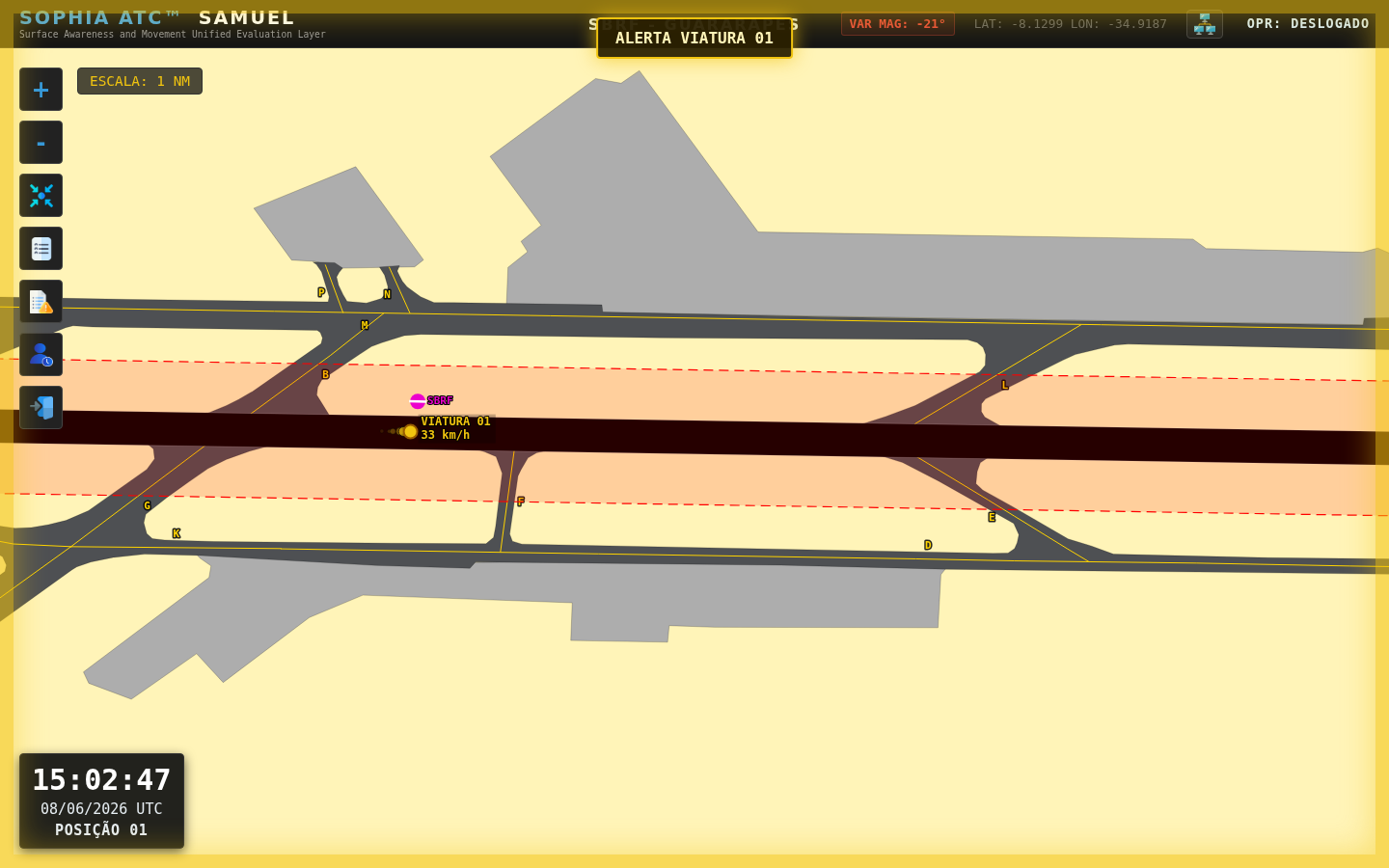
Protected-area monitoring and vehicle warning generated by SOPHIA SAMUEL.
Protected zones and runway incursion alerts
Runways, taxiways, holding points and other sensitive operational areas can be configured as protected zones. Vehicles equipped with SAMUEL trackers are continuously monitored in relation to those areas.
According to vehicle position, authorization status and the operational configuration of each area, the platform can generate presence warnings or runway incursion alarms for both the operational position and the personnel in the field.
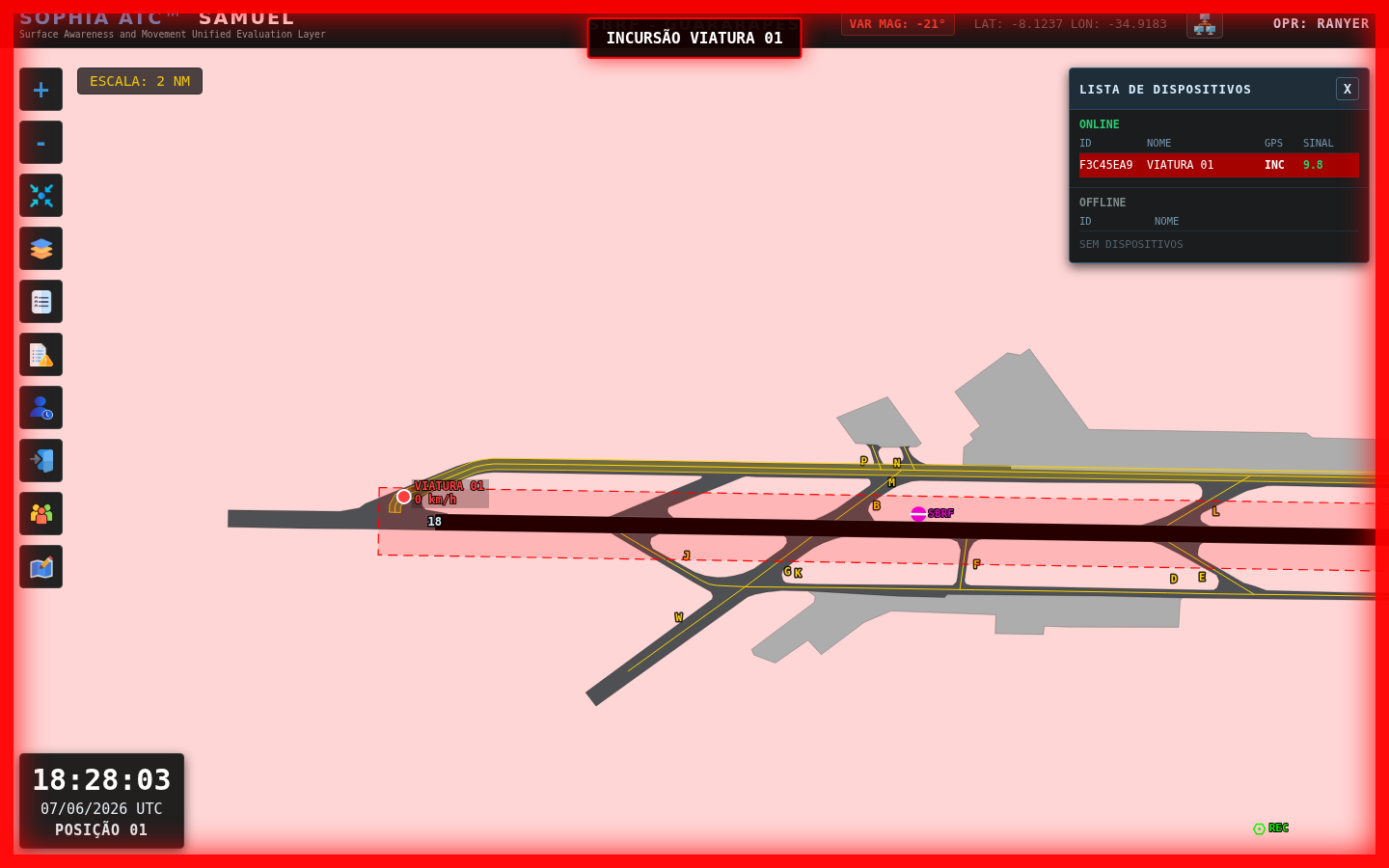
A runway incursion condition identified by the SAMUEL protected-zone logic.
The SAMUEL Tracker
A key component of the platform is the SAMUEL Tracker, a compact GNSS-based device designed for installation in airport vehicles or use by personnel operating in movement areas.
The tracker provides continuous positioning, identification and operational status information to the platform. It includes an OLED display and audible warning capability, allowing operational information and alerts to reach the vehicle operator directly.
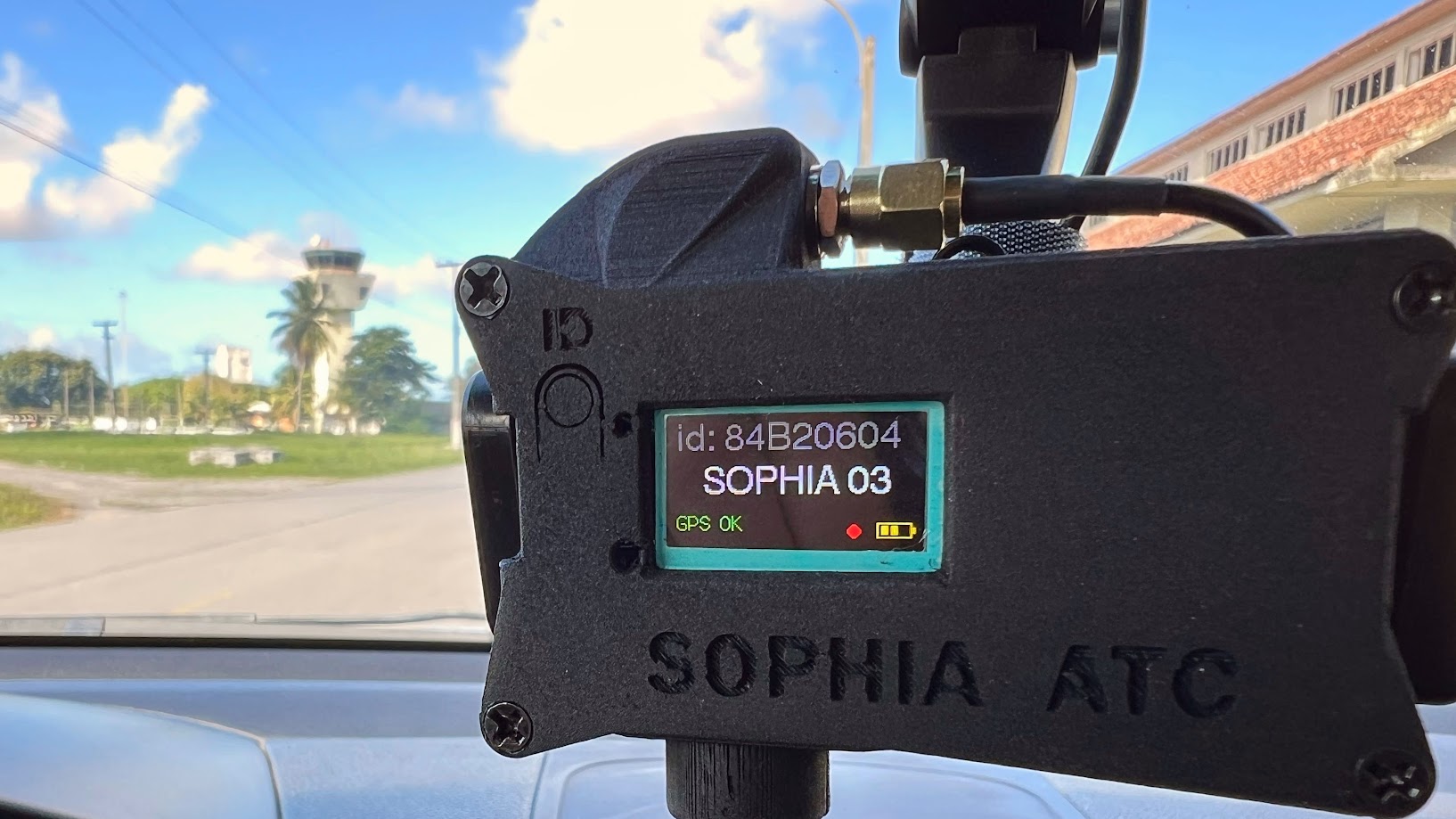
SAMUEL Tracker installed in a vehicle during operational testing.
Protected-zone information can also be stored locally in the device. This allows the tracker to retain part of its safety logic and provide a local warning even during a temporary interruption of communication with the central infrastructure.
The operational position can also interact remotely with individual trackers, including vehicle identification, authorization, radio attention alerts and device management functions.
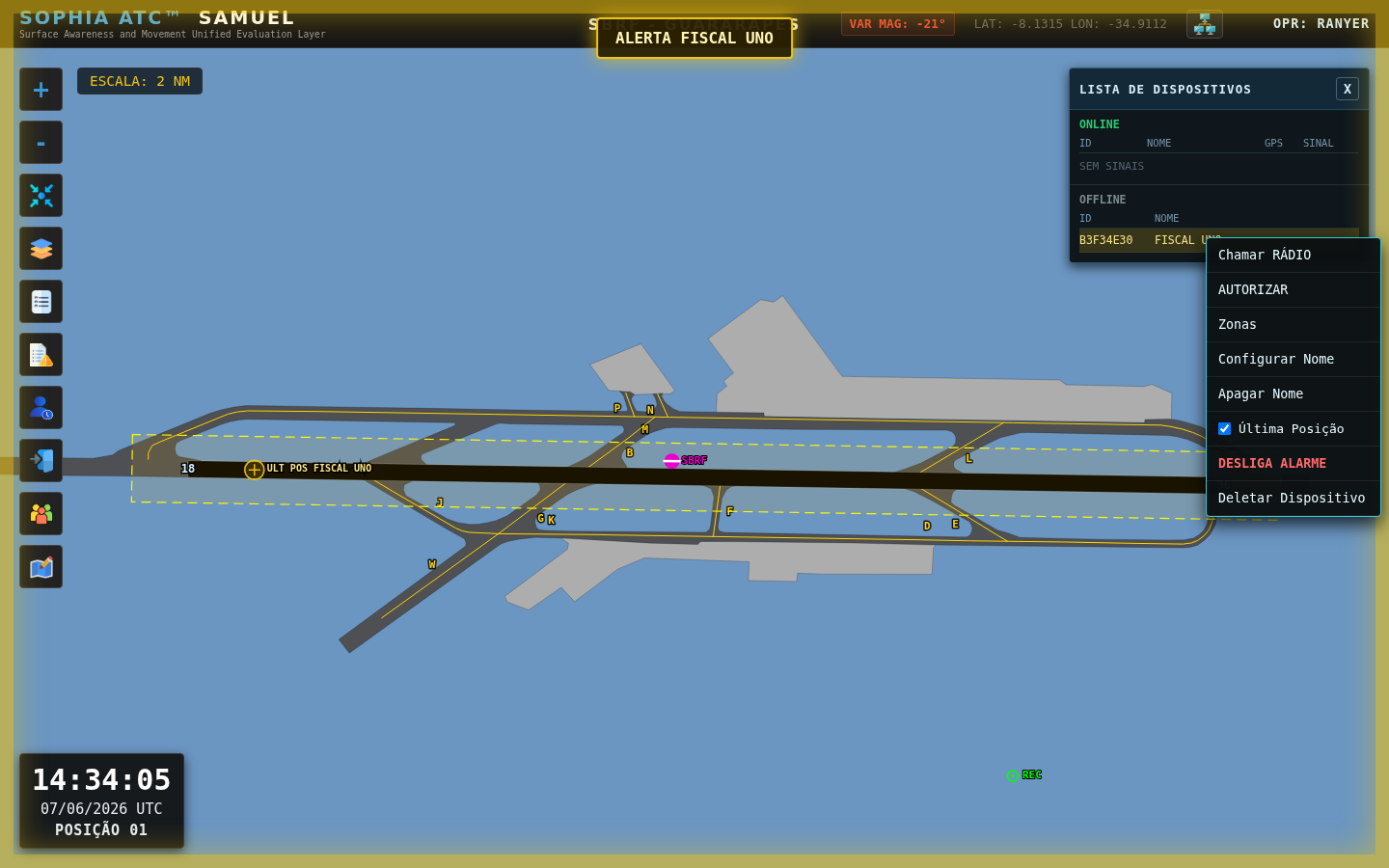
Remote interaction with individual SAMUEL trackers from the operational position.
ADS-B integration and predictive conflict detection
SAMUEL can receive ADS-B aircraft data as a complementary source of situational awareness, allowing aircraft operating in the vicinity of the aerodrome to be correlated with monitored vehicles and protected surface areas.
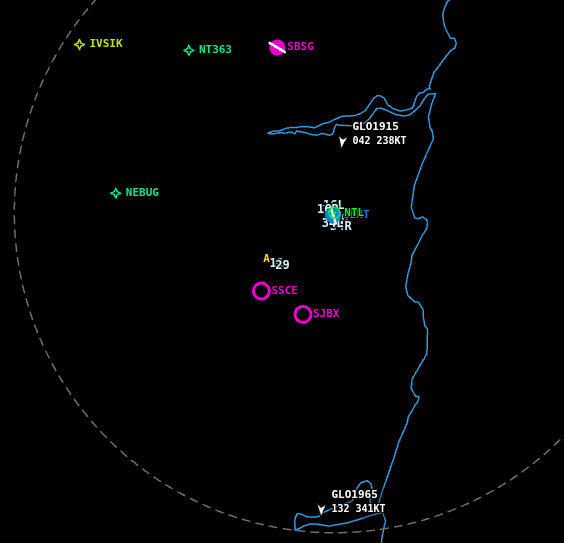
Aircraft information received through the ADS-B integration layer.
The platform can correlate aircraft position, speed, direction and projected trajectory with the position and movement of monitored ground vehicles. When a possible convergence is identified, SAMUEL can generate an early warning intended to increase the available reaction time before the situation develops into a more critical conflict.
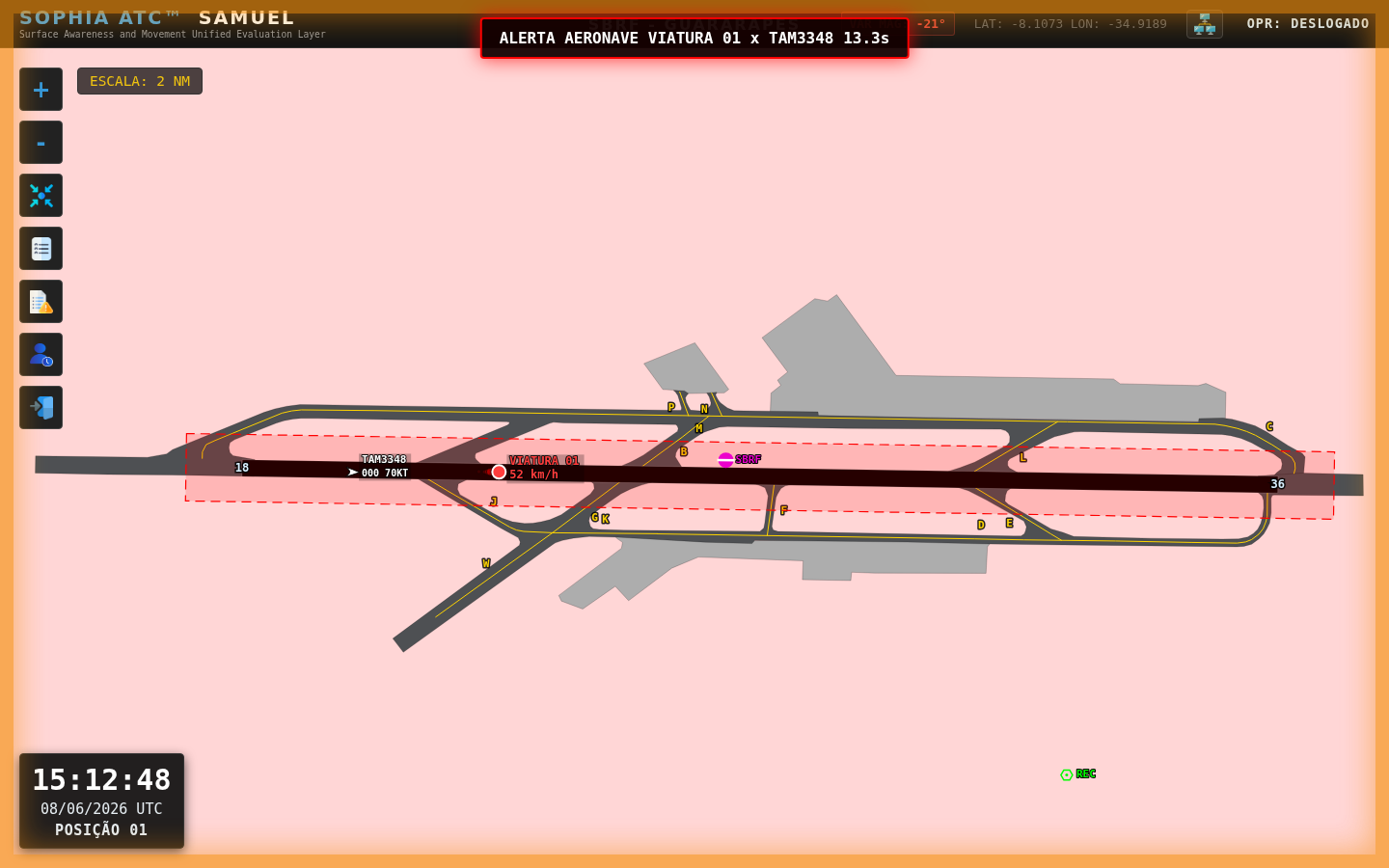
Predictive warning involving an aircraft and a monitored airport vehicle.
ADS-B information within SAMUEL is used as a complementary input for situational awareness and internal prevention algorithms. It is not intended for the provision of ATS surveillance services, aircraft separation or as a replacement for certified surveillance sources.
Making surface awareness accessible to regional airports
One of the objectives behind SAMUEL is to make airport surface awareness technology accessible to a broader range of aerodromes. Advanced surface monitoring capabilities have traditionally been associated with large airports and infrastructure based on dedicated surveillance sensors, including Surface Movement Radar and other components commonly used in A-SMGCS environments.
By combining GNSS-based vehicle tracking, local communications, protected-zone logic, complementary ADS-B information and software-based conflict detection, SAMUEL follows a different architecture that can be deployed with significantly simpler infrastructure.
This approach is particularly relevant for small and medium-sized airports, where the acquisition, installation and maintenance costs associated with conventional surface surveillance infrastructure may be difficult to justify. SAMUEL therefore aims to broaden access to surface situational awareness and runway-incursion prevention capabilities, providing regional aerodromes with an additional technological safety layer through a more accessible and scalable architecture.
Operational traceability and SAMUEL Analytics
The platform also records relevant operational events, including vehicle movements, protected-area entries, authorized accesses, alerts, runway incursions and operator actions.
Through SAMUEL Analytics, these records can be transformed into structured information for safety analysis, auditing, training and continuous improvement. Historical movements can be reconstructed spatially, allowing trajectories, movement concentration, operational hotspots and recorded occurrences to be reviewed after the event.
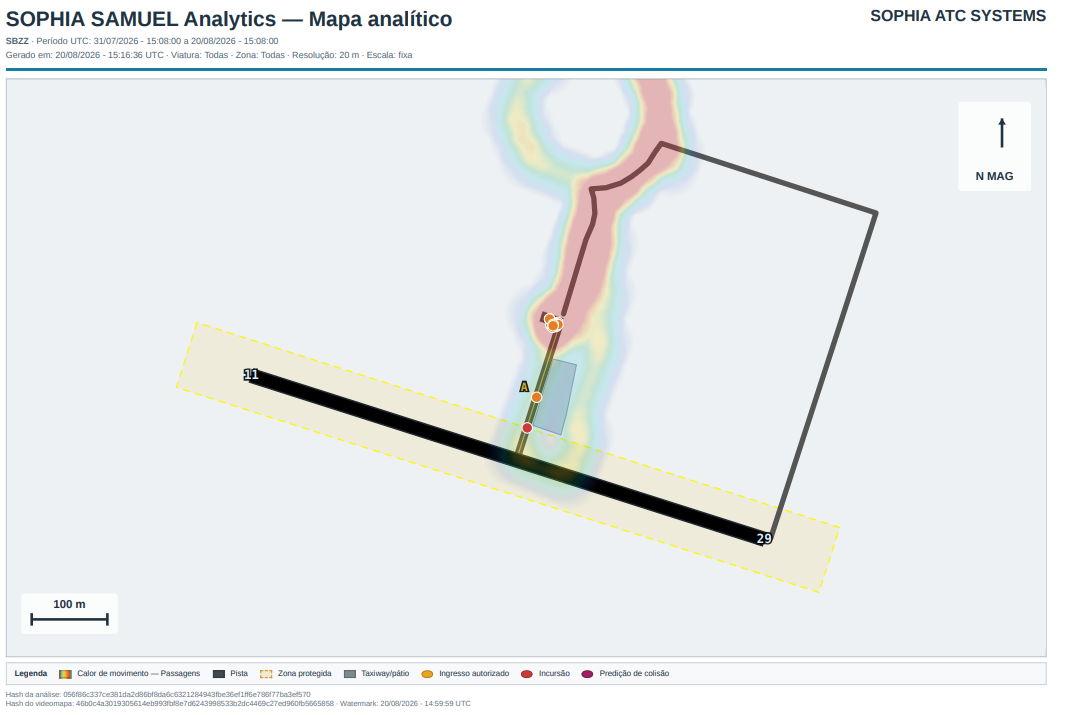
SAMUEL Analytics spatial reconstruction of surface movements and recorded events.
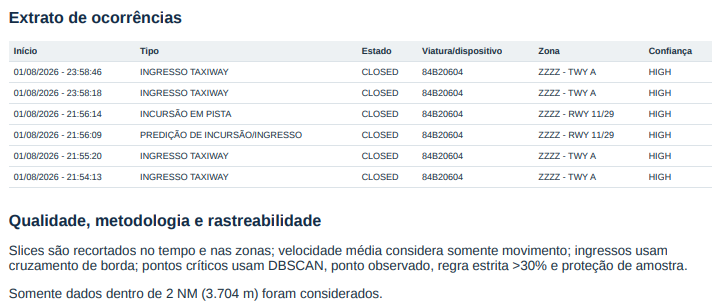
Structured occurrence extract generated by SAMUEL Analytics.
Designed around the operational environment
SAMUEL uses a local operational architecture integrating onboard trackers, communications, telemetry services, application servers, databases and operational positions. This allows deployments to be adapted to the characteristics and requirements of each aerodrome while maintaining local processing and operational traceability.
The platform was developed from experience in Air Traffic Control and airport operations, together with technical interaction with controllers, airport operators, field teams and vehicle drivers.
SOPHIA ATC Systems develops software and integrated solutions for Air Traffic Management, aeronautical messaging, operational visualization and aviation safety.
Systems. Control. Technology. Reliability.
.jpg)








.png)


Comments
There are no comments yet for this item
Join the discussion