By Michael Finke DLR and Viviana Couto Sayalero Deep Blue
Rising traffic volumes, environmental aspects and cost effectiveness issues are placing high demands on the future European Air Traffic Management (ATM). A prominent constraint is the increasingly serious lack of air traffic controllers (ATCOs) due the very difficult training to be completed by new aspirants, together with the high number of experienced ATCOs who will retire in the next years.
Current regulations and practises, largely unchanged for decades, involve rigid unit endorsements restricting the deployment of ATCOs to sectors where they are approved for. Today ATCOs can only operate in specific sectors where they have completed a time-consuming and expensive on-the-job training (OJT) finishing with an exam. Consequently, Air Navigation Service Providers (ANSPs) face high personnel costs and limited operational flexibility.
The IFAV3 approach
To mitigate the impact of upcoming retirements, which increased student intake alone cannot offset in time, ANSPs must transition towards more flexible ATCO deployment. Currently, rigid endorsement rules create a paradoxical situation in which valuable personnel are tied to underutilised sectors during low-traffic periods, while other sectors face overload due to high demand. These overstressed sectors often require a sector split or shorter shifts to be staffed with additional ATCOs, yet such adjustments remain impossible because the available ATCOs lack the specific unit endorsements required.
The SESAR’s IFAV3 project (Increased flexibility of ATCO validations) picked up this demand for an increased flexibility of ATCO deployment, with the overall objective to investigate strategies and enablers by maintaining current safety levels and in line with current regulations and standards, to enable a quick introduction in ATC operations. Started in 2023, the strong European consortium led by the German Aerospace Center (DLR), faced this challenge, bringing together leading ANSPs (ENAIRE, ENAV, LFV, NATS), research organisations (Deep Blue, NLR), universities (UPM, LiU), and ATM supplier Indra.
In collaboration with the European Aviation Safety Agency (EASA), the project IFAV3 has identified both the regulatory boundaries and the realistic opportunities of this research. Since European rules align with ICAO standards, certain core requirements and constraints had to be considered in the IFAV3 research: ATCOs must hold a specific endorsement for any sector they operate independently, acquired through theoretical and practical training and validated by a final examination.
As a first conclusion, a realistic starting point for defining a feasible IFAV strategy is a reduction of On-the-job training time, as well as a reduction of the effort spent with maintaining unit endorsements. This would allow ATCOs to hold and maintain more endorsements in parallel than today, and with reasonable effort.
Following these thoughts, the project objectives turn into two research questions:
1) What new means, technical or procedural ATCO support, or rostering practises, would practically allow a shorter OJT for a number of sectors?
2) How could this reduction be realised according to current regulations?
Starting with the second question, consultation with EASA confirmed the overall feasibility of this approach, as European regulations already provide a huge (but often unused) flexibility: ANSPs are fully free to define unit endorsements for sectors, including overlapping endorsements. As every defined endorsement has to be linked to a unit training plan (UTP) as well as to a unit competency scheme (UCS), the solution of the second question is basically to define, in parallel to the classical unit endorsement, some kind of an ‘IFAV unit endorsement’ for the same sectors/sector groups/aerodromes or parts thereof, with a separate UTP and a separate UCS. ANSPs could then define reduced training / endorsement maintenance requirements, while a safety assessment will lead to additional conditions for the actual deployment of an ATCO to a sector. For instance, a controller might be deployed under an IFAV endorsement only during specific traffic windows, or provided that advanced support tools are active. This represents a fundamental paradigm shift: moving away from the binary "endorsed or not" model towards an "endorsed under specific conditions" practise.
What can reduce on-the-job training?
Addressing the first question has been the main scientific task of the IFAV3 project. The most obvious approach would be to develop new ATCO support tools, which provide the right information at the right time in the right format; to provide more specific handling instructions in line with local procedures, or to completely automate single ATC tasks. As a result, there is no longer a need to train this knowledge or practice these actions. Therefore, the IFAV3 project has developed a whole set of assistance tools for en-route ATC, for example additional briefing tools, information display tools to highlight traffic flows and critical points, compressed local procedure indications and procedural alerts, and many other functions.
Beyond technical tools, IFAV3 investigated a new rostering approach, which includes two processes. The first one automatically monitors the working experience, handled traffic volume and traffic complexity, sector complexity, special situations and many more, by analysing the already existing data recordings (radar tracks, flight progress data, communication logs etc.) per ATCO.
The second process predicts the traffic complexity, traffic volume, sector complexity, and others, (or in short words: the real ATC tasks) to be expected for a specific shift in a specific sector. Comparing the results of both processes allows a deployment of ATCOs to basically all sectors and shifts with matching features and similar procedures; and with limited training, ensuring ATCOs have always sufficient knowledge and experience without months of OJT.
Further research was also spent on algorithms to support ANSP managers to optimize the sector group structure and sector group endorsements. This support tool allows managers to evaluate configurations based on strategic priorities (e.g. minimizing staff requirements or maximizing deployment flexibility), providing high-level guidance for decisions months or years in advance.
Additionally, IFAV3 is developing a standardized framework to help European ANSPs align their local Unit Competency Schemes (UCS) while maintaining the flexibility necessary for local operational needs.
To bridge the gap between flexible and fully generic ATCO deployment, IFAV3 also conducted a large-scale study on the role of increased automation, with a strong focus on increased automation levels on ATC side.
First steps towards deployment
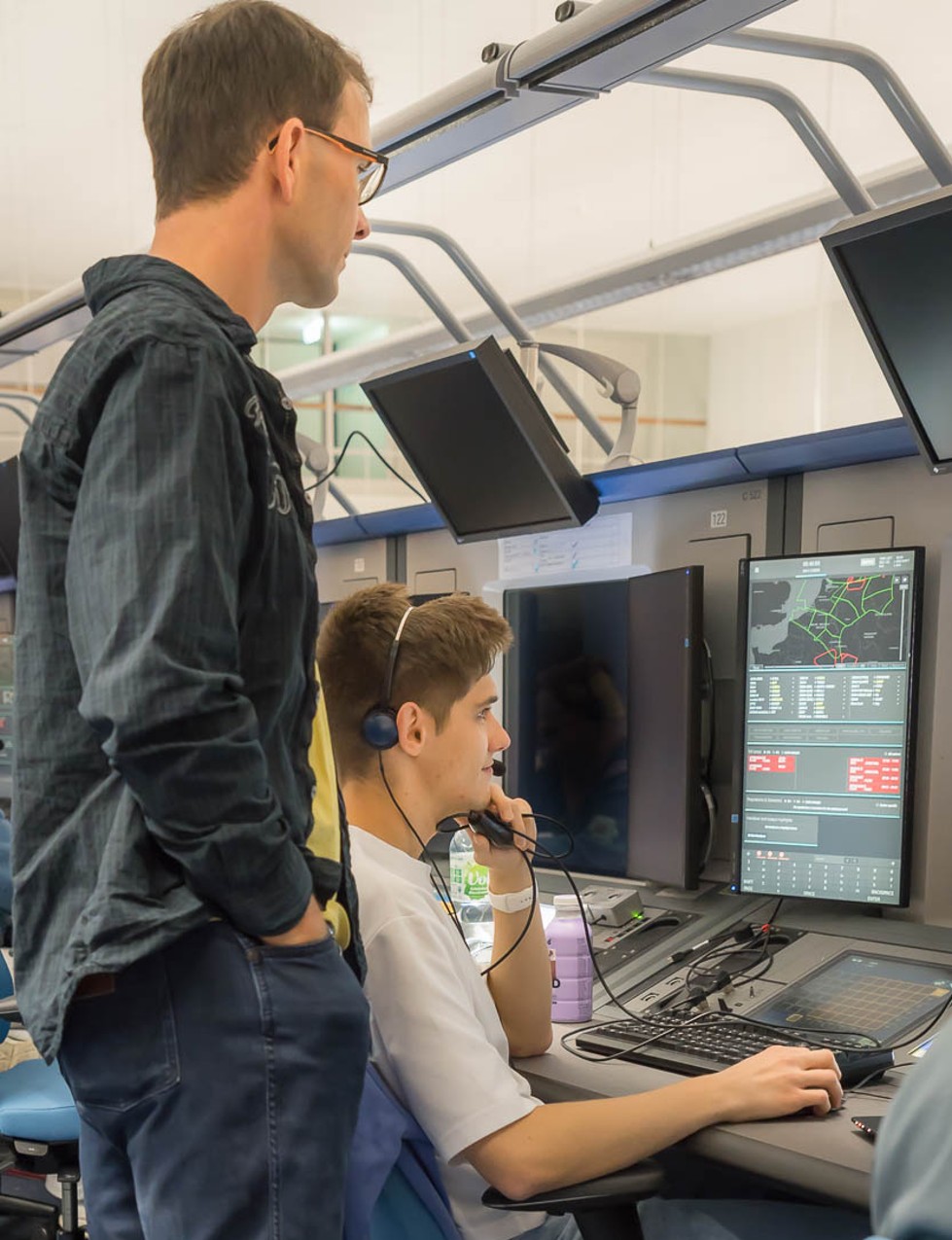
Most of the mentioned strategies and tools have been validated in close-to-reality simulations. In those cases where a simulation either was not possible due to the nature of the strategy, or not required due to the targeted maturity, a campaign of workshops with operational experts and ATCOs was conducted. The results strongly confirmed the overall feasibility and benefits of IFAV strategies, demonstrating that it is possible to significantly reduce the training effort required to both obtain and maintain sector endorsements.
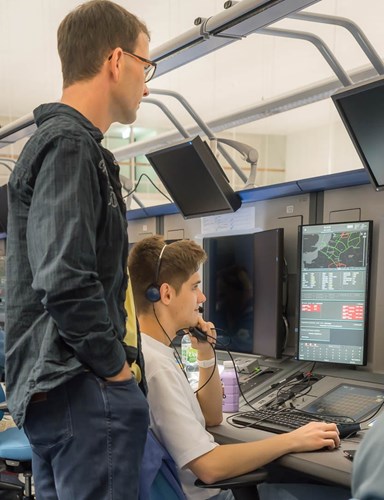
Figure 1: Validation of the new rostering strategy in the training simulator of Maastricht Upper Area Control Centre
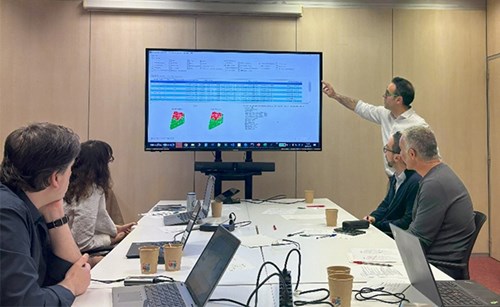
Figure 2: Workshop to validate the Smart Sector Grouping Support Tool
Future horizons
The IFAV3 project represents a strategic milestone towards a more flexible ATCO deployment, which is an eagerly awaited improvement of Europe’s ATM System, saving training costs and helping to counteract the increasingly serious lack of ATCOs across Europe.
First steps were also taken already to extend the research to the application in Remote Tower Centres. A separate working area of IFAV3 investigated the feasibility of applying IFAV strategies and enablers to aerodrome endorsements, and explored new tools and concepts, with the ultimate goal of reducing the effort needed per ATCO to get and stay endorsed on different small-size airports.
Due to its success, its potential and the existing demand, the IFAV topic will stay a prominent research topic for the next years, and it will ensure that European ATM remains resilient, cost-effective, and prepared for the operational demands of tomorrow.
This article originally appeared in the ATC Network Special Bulletin on Training, Simulation and Recruitment. You can read the full publication here:
.jpg)






.png)