This article originally appeared in the ATC Network Special Bulletin on Training, Simulation and Recruitment. You can read the full publication here:
Special Bulletin on Training, Simulation and Recruitment
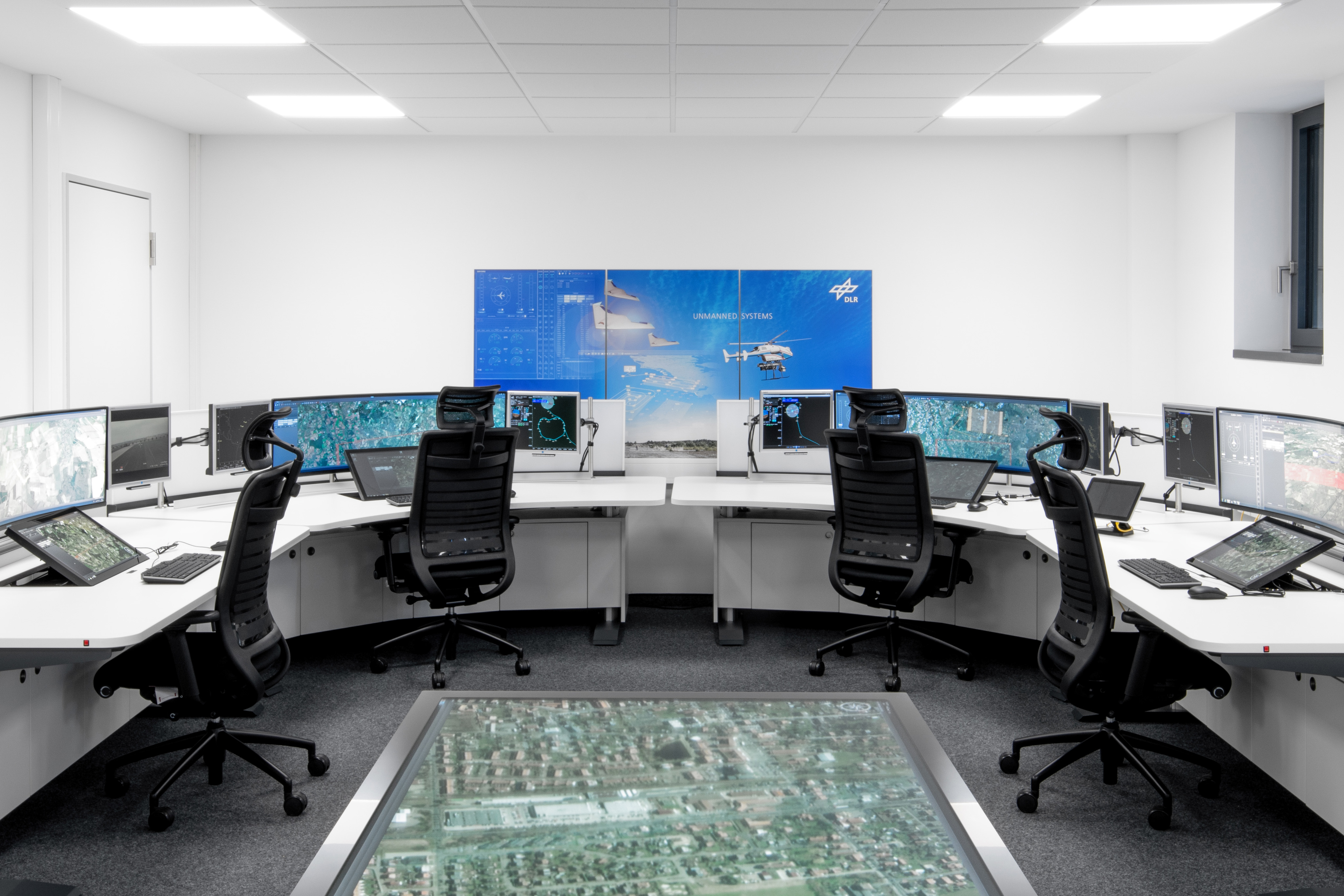
Real-time simulations (RTS) are a primary methodology for the testing and validation of technologies, processes, and operational procedures within the aviation sector. By replicating real-world environments, RTS allows researchers, engineers, and regulators to evaluate new systems under operationally representative conditions. This capability is essential for ensuring that modifications to air traffic management (ATM) do not compromise safety or efficiency before they are deployed in live environments.
However, the traditional infrastructure for RTS is undergoing a period of necessary evolution. The emergence of new airspace users, including Unmanned Aircraft Systems (UAS) and Advanced Air Mobility (AAM) vehicles, has introduced significant complexity into verification and validation (V&V) processes. Existing validation platforms often operate in isolation, making it difficult to simulate the integrated, multi-actor scenarios required by modern concepts like U-space. To address these limitations, the VISORS project (Validation Infrastructure SuppOrting Remote Simulations) was established to develop and demonstrate a federated, interoperable simulation framework.
Project Objectives and Organisational Framework
The VISORS project is funded by the SESAR 3 Joint Undertaking under the framework of the Horizon Europe programme. Running from September 2024 to February 2027, the initiative seeks to transition ATM validation from localised simulations toward a distributed and federated model. This approach involves connecting various simulation facilities across different geographical locations through a standardised prototype platform.
The core aim of VISORS is to enhance the interoperability between specialised simulators. By enabling remote connectivity, the project intends to strengthen the European ATM validation infrastructure, making it more flexible and capable of handling the high-fidelity requirements of future airspace concepts. Beyond the technical connection of hardware and software, the project also conducts economic analyses of validation processes, evaluates security protocols for cross-border data exchange, and investigates how distributed environments affect the collection of human performance data.
The project is executed by a consortium of European partners, representing a cross-section of research institutions, air navigation service providers (ANSPs), and technical experts. Specifically, it is guided by DLR – The German Aerospace Center, and composed of AIRBUS, CIRA – The Italian Aerospace Research Centre, Deep Blue, DFS – The German air navigation service provider, EUROCONTROL, NLR – Netherlands Aerospace Centre, and TXT Group. This collaborative structure ensures that the developed solutions are aligned with the operational needs of the broader aviation community.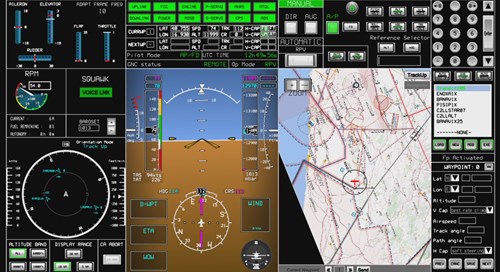
Technical Architecture and Interoperability Standards
Central to the VISORS project is the development of a sound architecture for simulator connectivity. The project utilises High-Level Architecture (HLA), a published and widely recognized standard for distributed simulation. HLA allows different simulation components, known as "federates", to communicate within a common "federation." This enables simulators located in different countries to exchange data in real-time.
The project focuses on elevating technical interoperability to support complex data types. While previous distributed simulations primarily shared flight trajectory data, VISORS aims on enabling distributed and federated real-time simulations that integrate human performance (HP) data alongside traditional technical simulation data, treating it as first-class data type within the HLA environment. This includes physiological signals, eye-tracking metrics, and behavioural measures. By integrating these metrics into the federated network, researchers can monitor and visualise the state of operators (such as air traffic controllers or UAS pilots) in real-time, regardless of their physical location.
The architecture also incorporates established communication methods to ensure data integrity and low-latency transmission. Security is a critical component of this technical framework, as the exchange of sensitive operational data between international facilities requires robust encryption and access protocols.
Defining the Validation Use Cases
To evaluate the viability of the VISORS platform, the project has defined three distinct use cases. These scenarios represent the most pressing challenges in contemporary and future airspace management, providing a testing ground for the federated simulation approach.
"Pure" ATM Operations
The first use case focuses on traditional air traffic management. The objective is to validate enhancements to existing ATM procedures, such as flow management and sector handovers, using a distributed setup. This allows multiple ANSPs to participate in a shared simulation without requiring personnel to travel to a single site. The focus here is on ensuring that the distributed nature of the simulation does not introduce biases or technical artefacts that would invalidate the results of the validation campaign.
ATM-UTM Integration
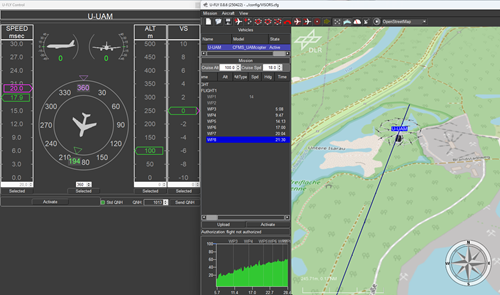
As U-space services transition from concept to reality, the interface between traditional ATM and UAS Traffic Management (UTM) becomes critical. This use case simulates the coordination required when commercial manned aviation and unmanned systems operate in proximity. The VISORS platform enables a UTM simulator from one place to interact seamlessly with an ATM simulator to another, testing the communication protocols and procedural safeguards which are necessary for safety integration.
RPAS Integration in Unsegregated Airspace
The third use case addresses the integration of Remotely Piloted Aircraft Systems (RPAS) into unsegregated airspace. This involves simulating large-scale RPAS operations alongside conventional traffic. The complexity of these scenarios requires high-fidelity modelling of both the aircraft performance and the command-and-control links. During the exercises, a prototype Detect and Avoid (DAA) system, an enabling capability for the safe inclusion of RPAS into civil airspace, will be operated on board of the simulated RPAS. VISORS will therefore also provide the opportunity to evaluate such a DAA prototype within a complex and highly detailed real-time simulation environment, testing the separation assurance, conflict detection and resolution, and contingency procedures under realistic and operationally representative conditions.
Human Performance and the Community of Practitioners
A significant aspect of the VISORS project is its emphasis on the human element within distributed systems. Traditional validation often relies on local observers to collect data on controller workload and situational awareness. In a remote or federated simulation, this becomes more difficult.
To solve this, the project is developing a networked Human Performance Dashboard. This tool is designed to receive and visualise HP data across the HLA network, allowing human factors specialists to monitor participants remotely. In October 2025, the project held its second Community of Practitioners (CoP) workshop, which focused specifically on the technical and operational requirements for this dashboard. Experts discussed the necessity of real-time versus post-run analysis and identified which physiological and behavioural tools should be prioritized for integration.
The CoP serves as an essential feedback mechanism, bringing together researchers, stakeholders, and potential users of the VISORS platform. This ensures that the technical outputs of the project meet the practical needs of the aviation validation community.
Project Progress and Current Achievements
Since its beginning, the VISORS project has achieved several key milestones. The primary result to date is the establishment of a robust architecture for simulator connectivity to leverage existing standards while introducing new capabilities for data exchange. This architecture has been validated through the detailed definition of the three use cases mentioned previously.
The project has moved from the initial requirement-gathering phase into the prototyping of the interoperability platform. The transition from theoretical frameworks to functional prototypes marks a significant step toward the final experimental demonstration. This upcoming demonstration will serve as the definitive test of the VISORS capability, involving the connection of multiple European simulation facilities to execute the use case scenarios.
Furthermore, the preliminary economic and technical assessments indicate that a distributed simulation model can reduce the costs associated with validation campaigns by minimising the need for physical infrastructure and personnel travel. It also allows for greater resource sharing among European research centres, leading to a more efficient use of simulation assets.
Conclusion
The VISORS project represents a strategic shift in how the aviation industry approaches the validation of new ATM concepts. By addressing the technical, economic, and human factors challenges of distributed simulation, the project provides a foundation for more complex and integrated V&V processes. As the aviation ecosystem continues to diversify with the addition of AAM and U-space, the ability to conduct high-fidelity, remote, and federated simulations will be a prerequisite for maintaining the safety and efficiency of global airspace.
The results generated by VISORS thus far suggest that a federated model is not only feasible but necessary for the future of ATM research.

.jpg)
.png)