
First Group of Trainees of BHANSA Training Centre Successfully Completes Basic Air Traffic Controller Training
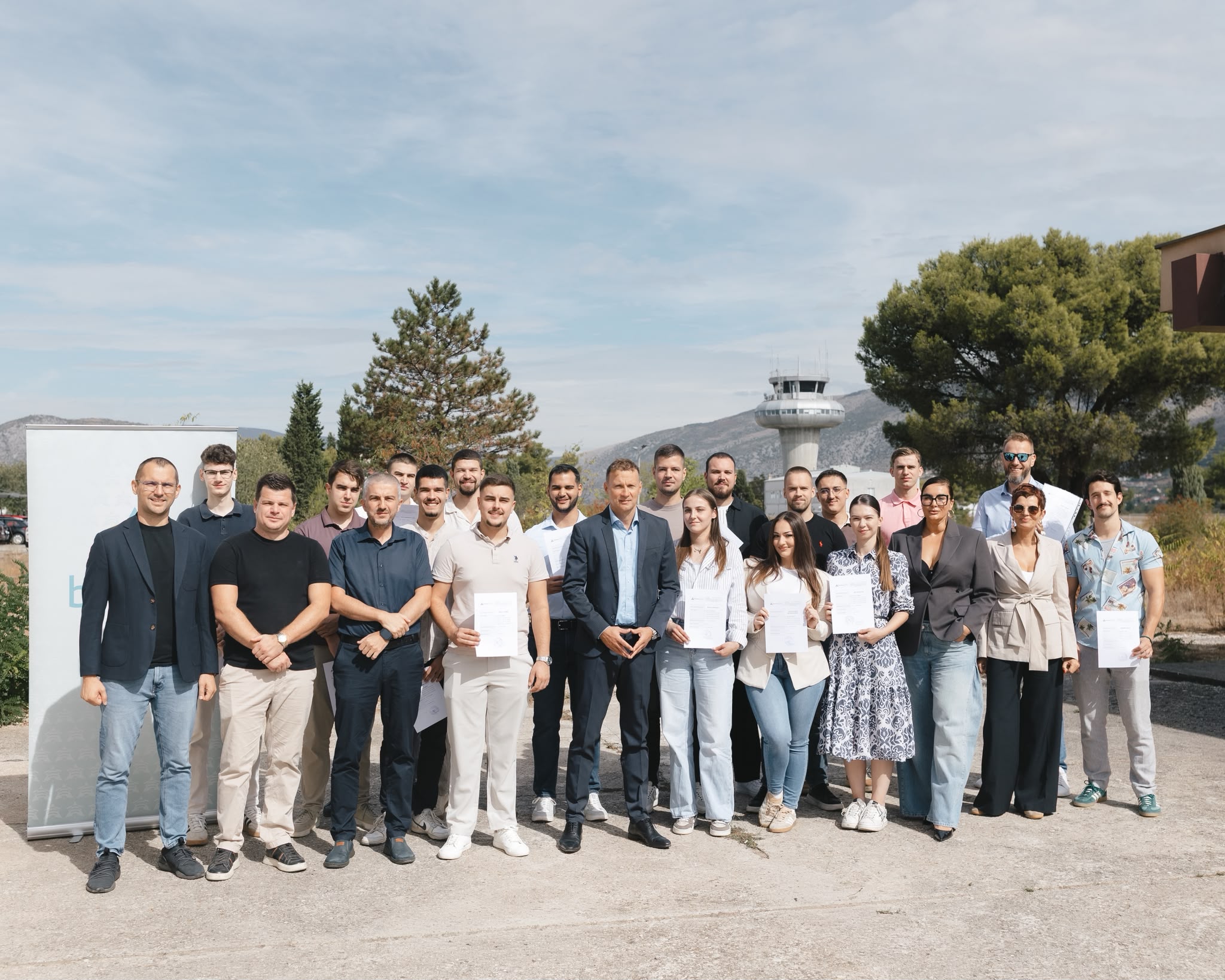
The first group of 17 trainees at the Training Centre of Bosnia and Herzegovina Air Navigation Services Agency (BHANSA) have been awarded certificates upon successful completion of the Basic Training.
This marks the completion of the first stage of their professional training, which began in June this year, when the first certified Air Traffic Controller Training Centre in Bosnia and Herzegovina was opened in Mostar.
During the Basic Training, the trainees acquired the knowledge and competencies required to continue their training towards obtaining an air traffic controller licence. In the subsequent stages, they will continue to develop the skills required to work in air traffic control, in accordance with European standards.
BHANSA’s Director Davorin Primorac emphasised that the completion of the first stage of training represents an important milestone not only for the trainees, but also for the development of the air traffic controller training system in Bosnia and Herzegovina.
“When we opened the Training Centre in June, our aim was to enable BHANSA to train new generations of air traffic controllers using its own resources and capabilities. Seventeen trainees have now successfully completed the first stage of training for one of the most demanding and responsible professions in aviation. It is particularly important to us that we are able to conduct the training with our own instructors, using modern equipment and in accordance with high European standards. In this way, we are developing the qualified personnel needed to ensure the safe management of air traffic,” Primorac said.
The Training Centre enables BHANSA to continuously train the qualified personnel it requires while reducing its reliance on air traffic controller training abroad. Air traffic control is a highly specialised profession for which there is also strong demand on the international labour market.
Air traffic controllers are responsible for the safe and efficient flow of air traffic. Their training is a lengthy and strictly regulated process requiring a high level of professional knowledge, responsibility and continuous professional development.
At a time of growing air traffic and increasing demand for qualified personnel, having its own Training Centre enables BHANSA to plan the long-term development of the workforce required for the safe and efficient provision of air navigation services.
.png)
.jpg)










Comments
There are no comments yet for this item
Join the discussion